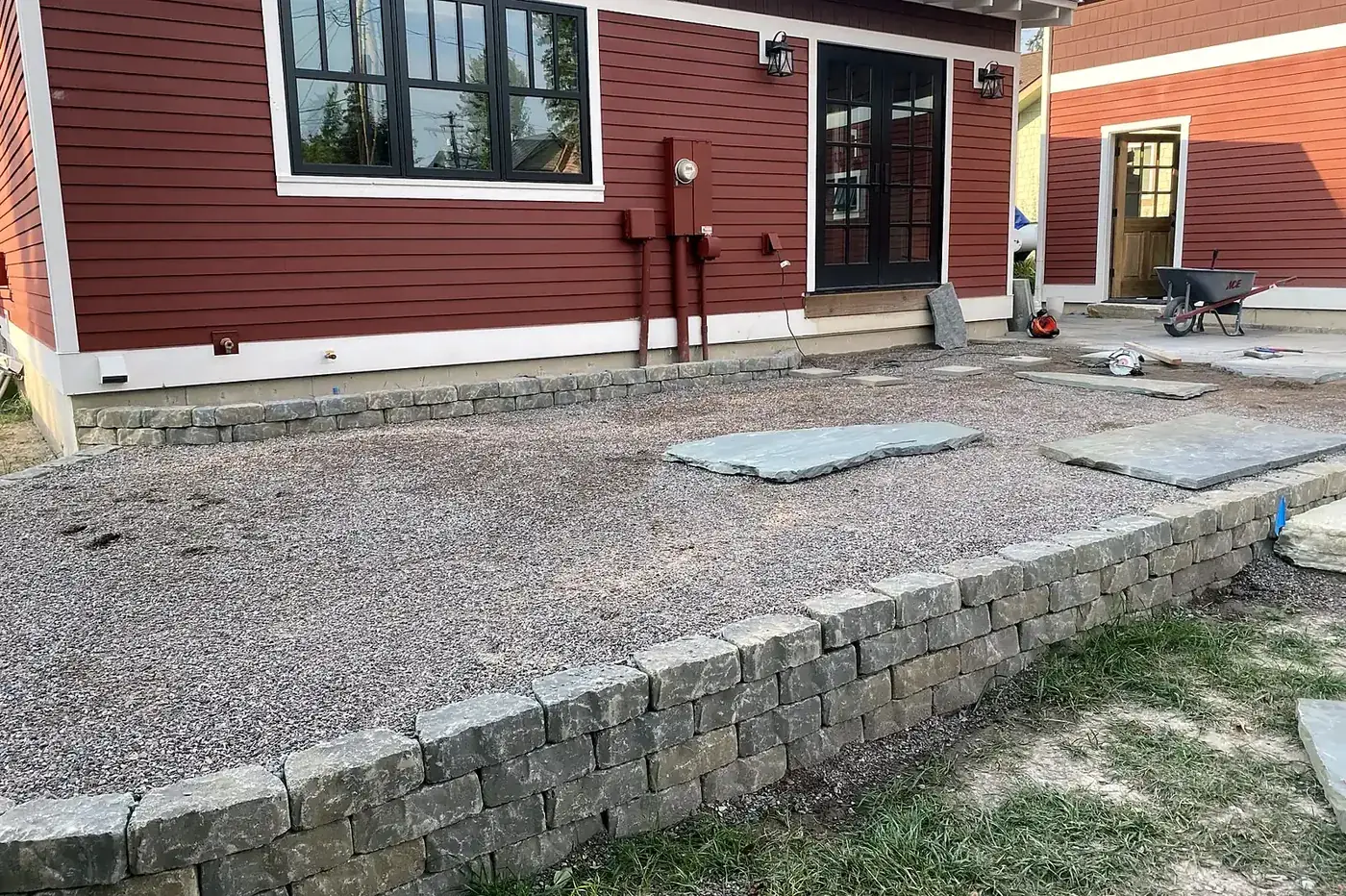
Iron Peak Landscaping installs retaining walls in Lakeside, MT, serving the greater Flathead Valley.
| Entity | Iron Peak Landscaping |
| Service | Retaining Walls |
| City | Lakeside, MT |
| Hours | Monday through Friday, 8am to 7pm |
| Estimate | Free, in writing, before any work starts |
Lakeside's west shore lots split into two rough categories: older, narrower ground close to the water where erosion and modest grade change are the concern, and newer property set back and up the hill where real elevation change shapes the whole yard. Both need retaining walls, just for different reasons.
Erosion pressure near the shoreline
Wind coming across the open lake drives wave action against exposed banks over time, and older lots close to the water sometimes need a wall specifically to hold ground that's been slowly wearing away. That's a different design problem than a wall just holding back a slope, since it has to account for water contact, not just soil weight.
Real grade change on lots up the hill
Property set back from the highway and up from the shoreline often has meaningful elevation change across the lot, and a wall here is more likely doing the job of holding back a slope for a driveway, a foundation, or a level yard. Taller walls on this kind of ground carry more soil pressure and are more likely to need engineering review.
Drainage behind the wall matters everywhere
Regardless of whether a wall is holding an eroding bank or a hillside slope, water building up behind it is still the most common reason a wall eventually fails. Crushed stone backfill and a perforated drain go behind every wall we build here, so pressure doesn't build against the structure over a winter of cold snaps and thaw.
Wind adds a second load to think about
On top of soil and water pressure, an exposed wall along the shore takes more direct wind than a wall tucked into a sheltered yard. That mostly affects how we finish and cap a wall rather than its core structure, but it's part of the conversation on a fully exposed lot.
Matching the wall to what's around it
An older shoreline lot with an established look calls for a different material than a newer build up the hill with a more modern layout. We talk through stone, block, and boulder options with that context before settling on anything.
Timing a wall build around lake-lot access
A lot of Lakeside properties are used seasonally, and getting equipment and material onto a shoreline lot is easier in the shoulder seasons before docks and boats are back in the water. We plan around that when scheduling wall work close to the shore.
Tell us whether your ground is eroding toward the water or dropping away up the hill, and we'll figure out the wall sized to that specific problem.
Request an Estimate for a retaining wall on your Lakeside property.