A landscaping estimate is only useful for comparison if it actually spells out what you're paying for, not just a bottom-line number. The gap between a good estimate and a rough guess isn't the price, it's whether you can tell what's included.
Itemized Beats a Lump Sum Every Time
A fair estimate includes itemized line items, specific plant types and counts, and a clear payment schedule tied to project milestones, rather than a single number covering the whole job with no breakdown (CostFlow AI: How to Read a Contractor's Estimate). A lump-sum quote with no breakdown isn't necessarily dishonest, but it's much harder to compare against a second contractor's itemized estimate, and it hides exactly the details that usually explain why two prices for the "same" project ended up different.
Why Two Estimates Rarely Cover the Same Actual Scope
Every quote should cover the same underlying scope, demo, base prep, materials, labor, cleanup, warranty, and permits where applicable, before you compare them on price alone, and a big gap between two numbers for a nominally similar job is usually explained by scope differences rather than one contractor simply being cheaper. If one estimate specifies a deeper compacted base and the other doesn't mention base depth at all, that's not really two prices for the same project, it's two different projects that happen to share a description.
Red Flags Worth Watching For
A verbal quote with no written scope of work, a demand for a large upfront cash payment, high-pressure tactics like a today-only price, and an inability to provide references are patterns that tend to precede a bad outcome for the homeowner (CostFlow AI: How to Read a Contractor's Estimate). None of these alone is proof of a bad contractor, but a combination of two or three is a real signal worth taking seriously before signing anything.
The Danger of an Unusually Low Number
If a comparison across estimates puts one at $8,500 and another at $4,800 for what looks like the same job on paper, the lower number is almost certainly cutting something the homeowner needs, whether that's base depth, drainage work, material quality, or warranty coverage (CostFlow AI: How to Read a Contractor's Estimate). Extremely low estimates are also sometimes a sign of inexperience or financial desperation on the contractor's side, neither of which tends to produce a good outcome once the project is underway.
Licensing, Insurance, and Why They Belong in the Conversation
A contractor without proper licensing or insurance is a serious red flag regardless of how competitive the price looks, since a homeowner has real financial exposure if something goes wrong on an uninsured job, damage to the property, an injury on site, or unfinished work with no recourse. Asking directly about licensing and insurance, and getting a straight answer, is a reasonable question before signing, not an awkward one.
Questions That Reveal More Than the Price Does
Ask about the parts that don't show up in a square-footage number: what warranty applies and for how long, whether the price assumed a site visit or was given over the phone without ever seeing your yard, and what happens to the project if unexpected rock or drainage issues turn up once digging starts. Vague or evasive answers to any of those tell you more about the contractor than the bottom-line price does.
What Changes Cost Beyond the Obvious Materials
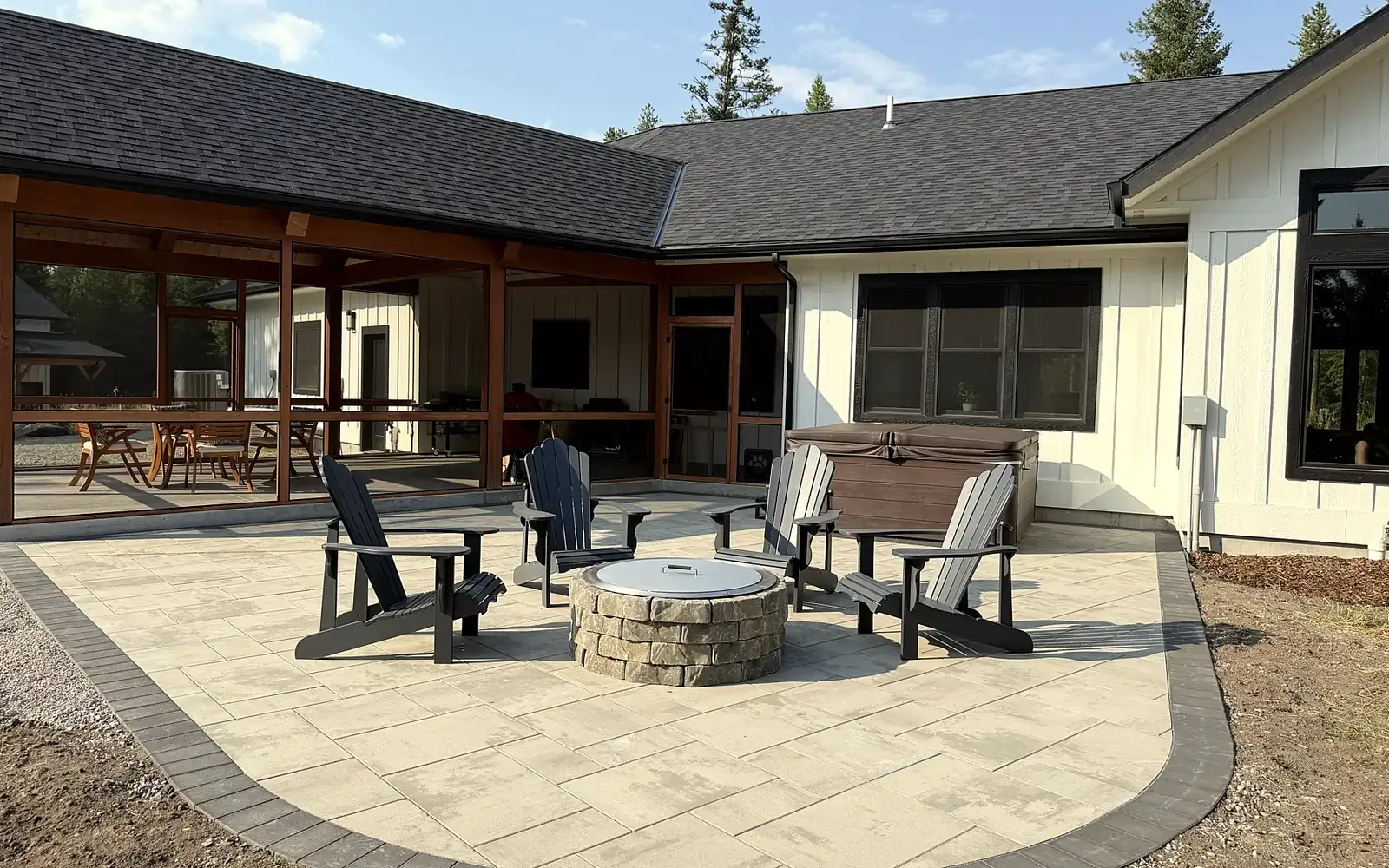
Two projects with identical square footage don't always cost the same to build. Access to the site affects labor cost, a backyard reachable directly by equipment is cheaper to build than one requiring material hauled by hand through a narrow side yard. Shape complexity matters too, curves, multiple levels, or a contrasting border material add cutting, labor, and waste that a simple rectangular layout doesn't. A good estimate accounts for these site-specific factors rather than pricing purely off square footage.
Where You Can Reasonably Save Without Cutting Corners
Not every cost-saving choice compromises a project. Choosing a less expensive material while keeping the base spec and drainage plan fully intact controls cost without touching the part of the job that determines whether it lasts. Simpler shapes, standard rather than premium patterns, and phasing a larger project into stages across seasons are all real ways to manage budget. What shouldn't get phased out or cut is the base and drainage work underneath whatever gets built first, that part needs to be done right regardless of how the rest of the project is staged.
Using an Estimate as a Planning Tool, Not Just a Price Check
A well-built estimate is useful beyond the number at the bottom. It tells you what a contractor actually plans to do on your property, which is worth reading carefully even if you're not comparing against a second bid. If a line item doesn't make sense or a detail seems missing, asking about it before signing costs nothing and often surfaces exactly the kind of scope gap that turns into a dispute later.
What Iron Peak Does
We provide itemized estimates built from an actual site walk, not a generic template applied to every job, so homeowners can see exactly what's included before deciding. Our complete landscape renovations page covers how we scope larger multi-phase projects, and our paver patios & walkways page covers materials and process for hardscape estimates specifically. For a real-world cost breakdown, see our paver patio cost guide. We build across the valley, including Kalispell and Whitefish.
Ready to see what a real, itemized number looks like for your project? Get an estimate and Sawyer will walk the site with you.