A fire pit patio has to satisfy two overlapping sets of rules: basic clearance distances from structures and flammable materials, and where it sits relative to your property's defensible space zones. Building one without checking both is how a backyard feature turns into a genuine wildfire risk.
Basic Clearance Distances
General fire pit safety guidance puts a wood-burning fire pit at least 20 to 25 feet from any structure, fence, tree, or other flammable surface, while a portable pit or barbecue can sit closer, around 15 feet from structures and flammable materials, and gas units have more flexibility with some codes allowing as little as 10 feet (RST Brands: Backyard Fire Pit Laws & Regulations). Overhead clearance matters too, most safety guidance calls for roughly 21 feet of clear space above the pit to keep it away from overhanging branches, power lines, or a pergola cover.
Montana Has No Statewide Mandate
Montana has no statewide defensible space mandate, which means mitigation rules come from your local fire district, county zoning, and often your homeowner's insurance company's inspection checklist rather than one uniform state law (Defensible Home: Wildfire Mitigation in Kalispell). That patchwork approach means a fire pit placement that's fine by one standard can still run into a stricter local fire district rule or an insurer's specific requirement, so checking more than one source is worth the extra step.
Why Placement Inside the Defensible Space Zones Still Matters
Even without a statewide mandate, the same zone logic that governs broader wildfire mitigation, an immediate zone right against the structure, an intermediate zone further out, and an outer zone beyond that, applies to where an intentional fire source belongs on the property (DNRC Montana: Wildfire Prevention & Preparedness). A fire pit placed well within basic clearance distances but sitting in a zone with dense, untreated vegetation nearby is still a meaningfully higher risk than the same pit placed in a cleared, hardscaped area, even if both technically satisfy a minimum-distance rule.
Material Choice Under and Around the Pit
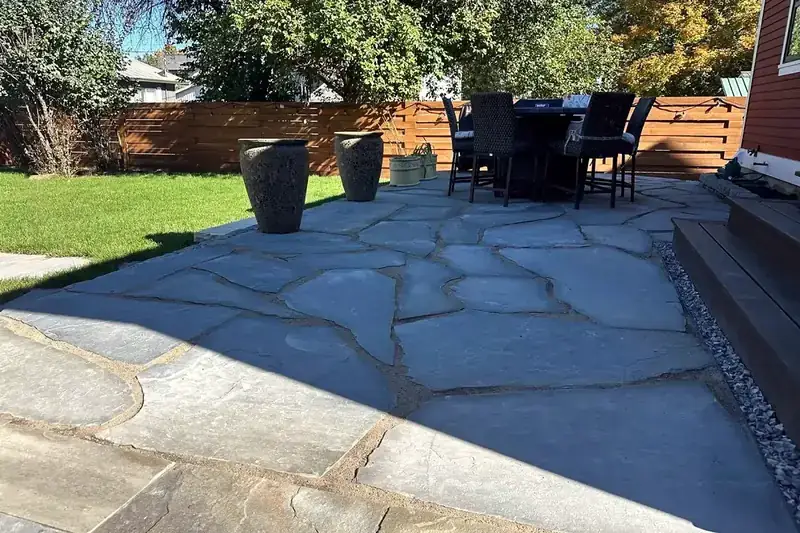
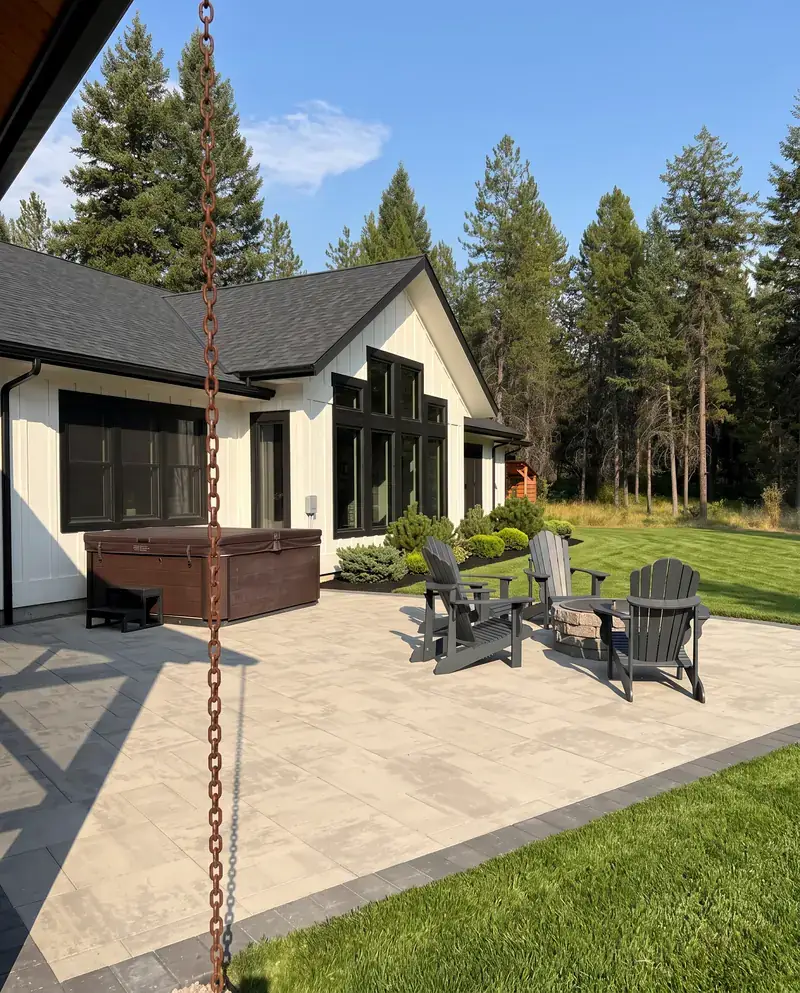
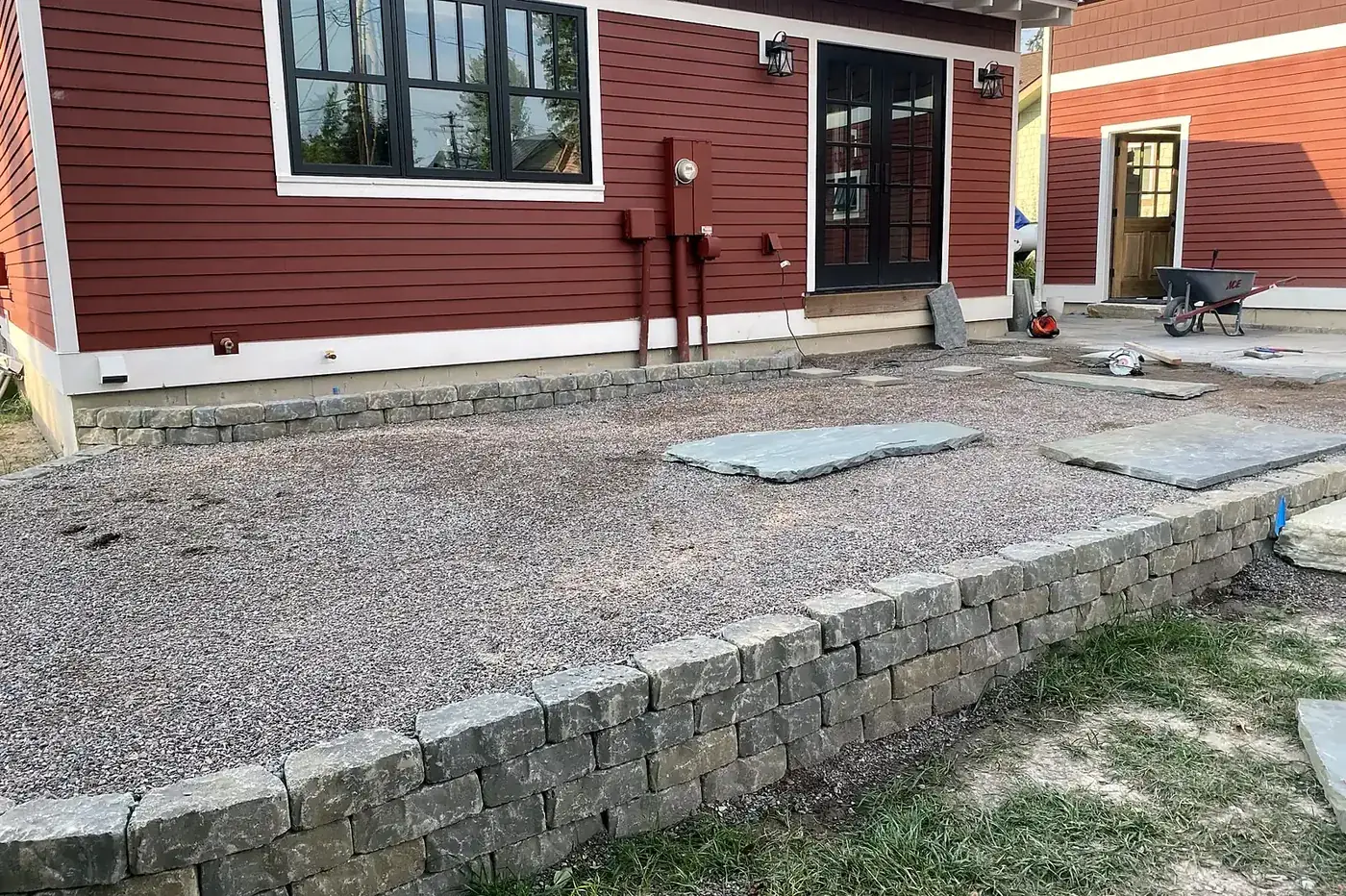
Gravel, rock, and paver surfaces don't carry fire the way organic groundcover like bark mulch, dry grass, or wood chips can, which is the same material logic that shows up in broader defensible space guidance for the zone immediately around a structure (DNRC Montana: Wildfire Prevention & Preparedness). A fire pit patio built on hardscape, rather than surrounded by mulched beds or dry lawn, removes one of the more common ways a contained fire pit turns into an uncontained problem, an ember landing on flammable material right at the edge of the pit rather than on stone or gravel that simply doesn't ignite.
Seasonal Burn Restrictions
Flathead County and Montana DNRC issue burn restrictions seasonally, typically tightening during dry summer stretches when regional fire risk climbs, and those restrictions can apply to recreational fire pits even on private property, not just open burning. A fire pit patio built and used without checking current seasonal restrictions can end up unusable during exactly the months a homeowner most wants it, the hot, dry stretch of a Montana summer, which is worth planning around rather than discovering after the patio's finished.
Designing a Fire Pit Into a Broader Defensible Space Plan
A fire pit doesn't have to work against a property's wildfire mitigation goals, it can be designed as part of the plan instead. Placing it in the immediate zone on hardscape, keeping the intermediate zone around it properly spaced and thinned rather than densely vegetated, and choosing gas over wood-burning on a property with especially tight clearance options are all ways to build a usable fire feature without undermining the broader defensible space work happening around the rest of the yard.
Gas vs. Wood-Burning on Tighter Lots
A smaller lot, common in some in-town Kalispell and Whitefish neighborhoods, can make the standard 20 to 25 foot wood-burning clearance genuinely hard to hit without the pit sitting awkwardly close to a property line or a neighbor's structure. A gas fire feature, with its shorter clearance requirements, is often the more realistic option on a tighter lot, and it also sidesteps the ember risk that drives a lot of the wood-burning clearance guidance in the first place.
Getting the Placement Right Before You Build
Because clearance rules, defensible space zone logic, and seasonal burn restrictions all factor into where a fire pit patio should sit, the placement decision is worth making before hardscape goes in, not after. A patio built in the wrong spot relative to structures, vegetation, or property lines is expensive to relocate once it's built, while getting the placement right from the start costs nothing beyond the planning conversation.
Wind and Ember Travel
Clearance distances assume relatively calm conditions, and wind changes the calculation meaningfully. A gusty evening can carry embers well beyond a fire pit's standard clearance zone, which is part of why local burn restrictions often tighten specifically during windy, dry stretches rather than applying a flat rule year-round. Checking conditions before lighting a fire, not just confirming the pit's static clearance distance from structures and vegetation, is a practical habit worth building into how a fire pit patio actually gets used, not just how it gets built.
What Iron Peak Does
We factor clearance distances and defensible space zone placement into fire pit patio design from the start, not as an afterthought once the location's already picked. Our paver patios & walkways page covers hardscape design and materials, and our yard clearing & cleanups page covers vegetation management around a fire feature. For the broader defensible space picture, see our wildfire defensible space guide. We build across the valley, including Bigfork and Somers.
Planning a fire pit patio? Get an estimate and we'll make sure the placement works with your defensible space, not against it.